Snapshots of History: Broadway Street in Diagonal
PROTECTED CONTENT
If you’re a current subscriber, log in below. If you would like to subscribe, please click the subscribe tab above.
Username and Password Help
Please enter your email and we will send you a password reset link.
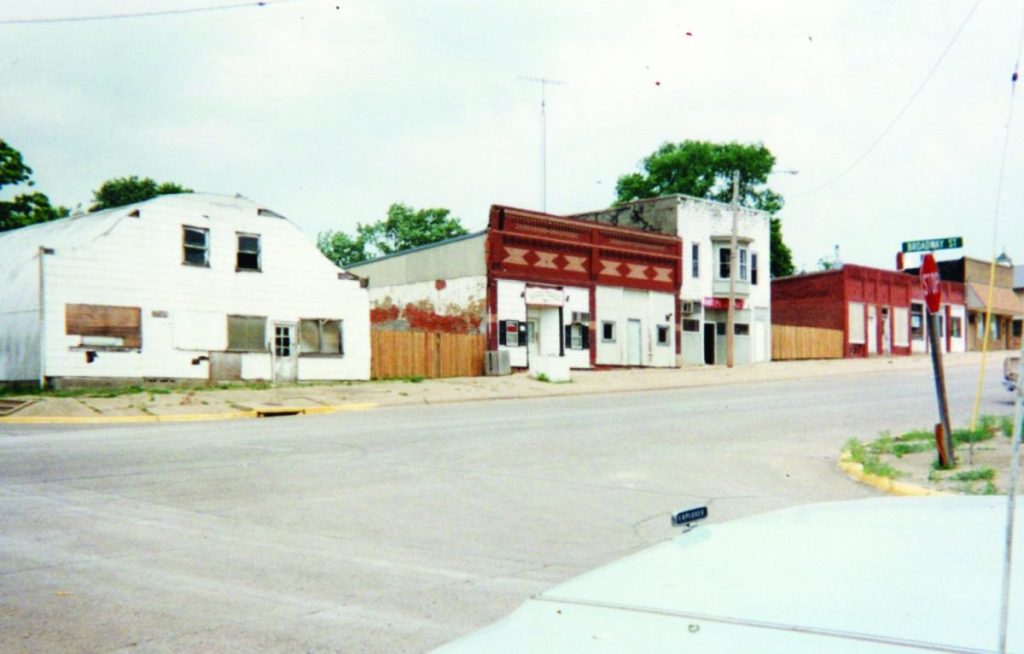
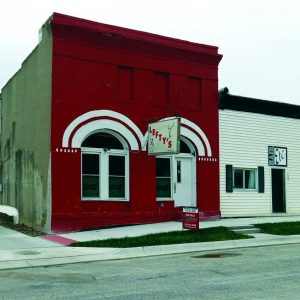
Broadway Street in Diagonal in 1997.
By Mike Avitt
I recently found some 15 year old pictures on an SD card and it reminded me how I get, find, and lose photographs.
So, let’s look at image collecting and my success and failures. And welcome to Snapshots of History” number 650.
I took this week’s photo in Diagonal in 1997 but it wasn’t planned.
I remember pulling up to the stop sign and looking up the street. The light and view were perfect and the scene looked picturesque. I had my camera in the front seat and I grabbed it.
I was not yet collecting Ringgold County history so I consider this occasion as just a fluke. However, four years later I took a photo of the Diagonal movie theater and Skelly Station with the intent of preserving history. We can’t save every building but we can take photographs of them and that’s what I do.
I have taken more than 500 pictures of Ringgold County in the last 23 years.
I take pictures but I also scan images from other material, such as cookbooks. There is a really good picture of the Diagonal United Presbyterian Church in a Diagonal cookbook, the year of the book escapes me, but cookbooks sometimes have pictures in them; I’m not sure why.
High school yearbooks have low-quality photos but sometimes I can improve a poor photo on my computer. Telephone books also have low-quality pictures.
Newspapers, platbooks, business directories, magazines, programs, business cards, and posters are a good source for photos and advertising, I collect advertising, as well.
Picture postcards were very popular beginning about 1907. These postcards are an excellent source of pre-WWI images.
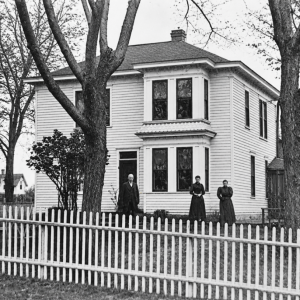
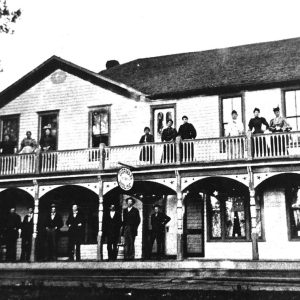
Local postal cards were produced by professional photographers well before 1907, but it was against federal law to write a message on the address side of a postcard until 1907. So professional photographers, who previously shot mostly portraits, were now out on the streets shooting schools, churches, banks, hotels, street scenes, celebrations, depots, and even private homes.
However, these postcards are scarce today for at least three reasons. First, the photographers didn’t produce each shot in great numbers. The cards produced had to be sold, not sitting in inventory. Second, the postcards were very often mailed to other states putting much distance between the card and the scene represented. And third, a lot can happen in 120 years. Some postcards get thrown away while many others get buried under decades and layers of accumulation.
Picture postcards exist in the backs of closets, deep in boxes, and hidden in other items like books and trunks.
Technology and World War I stifled the professional photography industry. The advent of Brownie cameras in the 1920s and photos appearing in everything from newspapers to high school annuals weakened the demand for hired photographers.
In my search for history-related photographs, the 1920s and 30s are the hardest to use because of the low quality. The 1940s saw the resurgence of picture postcards and better cameras.
I’ll finish out my space by telling you about Clair Heyer’s photo collection. I am not in ownership of it but I have seen it.
Clair was born in Tingley in 1910 and moved to Waterloo in 1924. But he was always in love with Tingley and photographed it his entire life.
He used a tripod which is mandatory for slow shutter speeds, therefore, the photos are high quality. My guess is there are around 4,000 pictures, but it is hard to guess as he made many duplicates in the latter years.
He also made copies of his parents’ photos, and no doubt others, so there are many pre-1920 pictures.
Most of the pictures were taken outside Ringgold County and most are of people and activities.
I was shocked to find only one photo each from Diagonal, Mount Ayr, and Clearfield. None from Ellston (except the railroad reservoir), Shannon City, nor Arispe. But, there were several from Hopeville in Clarke County during the 1960s. So, a very interesting, exciting, and admirable collection.
I use a great number of pictures that were taken by people who came before me, so I want to take pictures that will be used by people that come after me.
Every once in a while, I see a picture of Ringgold County on the internet that I haven’t seen before, so I’ve got much collecting yet to go.