Snapshots of History
PROTECTED CONTENT
If you’re a current subscriber, log in below. If you would like to subscribe, please click the subscribe tab above.
Username and Password Help
Please enter your email and we will send you a password reset link.
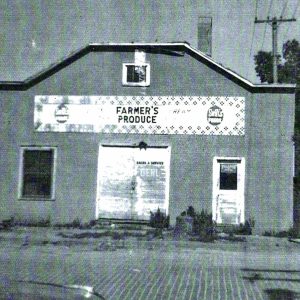
I took this week’s photo in 2002. It shows the former Warin Oil Service Station in Maloy which closed in March 1986. Coincidently, Johnny Warin, the founder of Warin Oil Company, died the same month.
This is one of the earliest photos I took in Ringgold County strictly for historic reasons. Let’s look at Maloy this week.
The Mount Ayr Record-News is full of historical accounts; some brief and some lengthy. Many of them are difficult to find because they are not on page one. I found such an article on page three of the December 24, 1931 Record-News. The article is written by Monroe Newton.
Mr. Newton seems to have lived most of his life in the Maloy and Blockton vicinity and was a rural school teacher for many years. His first wife passed and he remarried. They spent their remaining years in Clearfield with Newton passing in 1957. He was the father of Jim and Elizabeth. Newton explains that Basil Turner was a big land owner in the early years and that the stage coach passed by what would later become Maloy. The stage coach terminated at Nebraska City and ceased operations in 1868.
The Turner farm then passed into the hands of Samuel Hartley, then Jerry Shay, then Mike Hart, and then Luke Hart. About 1875, Mike Rush built a store on the south bank of the river bend and a post office called Delphi was established. In 1879 or 1880, Rush sold his store to Colonel John Fox as Rush went over to the new railroad to establish the town of Delphos. Colonel Fox operated the store until his death in 1895. A tavern and blacksmith shop was run by a Mr. Argo.
The name of the post office was changed to Maloy in honor of David Maloy, a successful farmer and rancher living southeast of Maloy. The Chicago, St. Paul, & Kansas City Railroad came in 1887 with Jerry Shay and John Carter donating land for the right-of-way. Now, the town was on the rise. Mike Hart, William Hart, and Lewis Reynard opened stores and Bennie Waring became the town doctor. Rube McClure and John Hartley started a lumber yard and livery barn. Elias Cowell built a hotel. Scott Lee had the harness and cobbler shop. Regular train service began about July 4, 1888 with Dick Douglas as the first depot agent and Lee Hagen as the first section foreman.
In 1888, the Catholic Church was moved from the Catholic Cemetery into town. In 1904 that building was moved back on the lot and a larger church built in its place. Both buildings burned in the June 17, 1931 fire. Other churches in Maloy included Free Will Baptist, Untied Brethren, Baptist, and Christian.
About 1894, a wood-frame school was built on the site of the future brick school. The brick school was built in 1917.
Monroe Newton’s account seems very accurate to me. I don’t know what he used for resources but I’m guessing he talked directly to old timers in the area, some who would have been living in the 1870s and later.Maloy celebrated its centennial in the middle of June 1987. An estimated 2,000-2,500 people attended the event which featured many contest. Dusty Barber won first place in the Ugly Pickup Contest. That’s a new one for me. The parade showcased an Austin Bantam automobile rebuilt by the late Emeral Wheelen. I was at this event. There was a keg of beer behind the Catholic Church and that’s all I remember.