Snapshots of History by Mike Avitt
PROTECTED CONTENT
If you’re a current subscriber, log in below. If you would like to subscribe, please click the subscribe tab above.
Username and Password Help
Please enter your email and we will send you a password reset link.
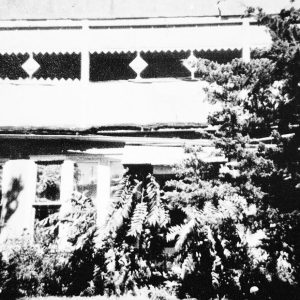
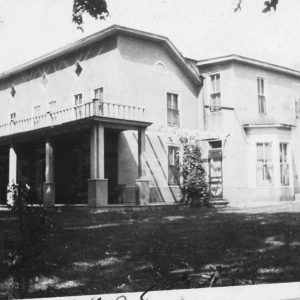
German was the last name of the family that owned the hotel. This hotel would briefly become a sanitarium, but allow me to build up the story.
Last week I spent the day with Fred Stark in Washington, Iowa. Fred is a former teacher (1964-1973) in the Mount Ayr School District. In the 1960s, Fred and fellow teacher Barton French traveled to Siloam Springs, Mo. to view the remains of a sanitarium at that place. Siloam Springs is two or three miles southeast of Denver, Mo. and our explorers found the former health spa in a very dilapidated condition. Still, this trip made a lasting impression on Fred. Mount Ayr had two sanitariums, establishments for long-term illnesses.
Holistic or alternative treatments became popular in Mount Ayr around 1900. These treatments focused on “whole-body” wellness and were pseudo scientific in nature. Faith healing, dreamcatchers and crystals are examples of holistic medicine.
In June 1900, Dr. J. R. Gilmour arrived with his family to set up a practice. Dr. Gilmour, a doctor in osteopathy, was located at 115 N. Taylor in Mount Ayr. In 1904, he announced he had leased the entirety of the Willow Home boarding house for the purpose of establishing a sanitarium. Shortly afterward, Dr. Gilmour wrote in the Ringgold Record that the deal had fallen apart; an agreement could not be reached. In January 1908, Dr. Gilmour moved his family to Hobart, Okla. to begin a practice there. The good doctor returned to Mount Ayr in January 1914 and purchased the German Hotel in February of that year. He fitted the former hotel as a sanitarium. But, it didn’t last. Dr. J. R. Gilmour died August 1, 1914 of a liver disease. Gilmour had an assistant, Dr. George Alexander, but he moved to Duluth after Gilmour’s passing. Dr. W. P. McPheeters bought the practice of Dr. Gilmour, but McPheeters, also an osteopathic physician, located upstairs at 116 W. Madison St. Alternative medicine and treatment remained popular.
Dr. E. A. Trotter, a chiropractor, came to Mount Ayr in 1916 and placed ads in the newspaper suggesting diseases come from inside the body rather than an outside source. The ad said the brain’s ability to communicate with cell tissue is impeded by bones being misaligned. Trotter was here a couple of years.
In 1920, Dr. L. H. Ahrens bought the house at 201 W. Jefferson St. and converted it into Mount Ayr’s first hospital, a private hospital. In 1921, Dr. Ahrens brought aboard Dr. Lela Sash, a doctor of osteopathy, to handle women and children diseases. In early 1924, Dr. L. H. Ahrens converted his hospital into a sanitarium. A new office building had been erected south of the hospital to house additional equipment. Dr. Ahrens ran an announcement in the April 2, 1924 Record-News stating a week’s stay at the sanitarium would be $15 to $20 a week. This would include hydrotherapy, electrotherapy, mineral baths, massages, physiotherapy, X-ray treatments and doctor and nurse attention. Drs. Eager and Kuhns would also participate in these practices.
By September 1, 1924, it was “game over.” The old hospital was for sale, rent or trade and Dr. L. H. Ahrens had already set up a practice in Fontanelle, Iowa. So, the sanitarium is now a residence, but alternative treatment is more popular than ever. Acupuncture, aroma therapy, equine therapy, reflexology, meditation, hypnosis and copper bracelets are just a few examples of alternative treatment. Copper bracelets are promoted as reducing arthritis pain. Do they work? They work if you believe they work.