Snapshots of History by Mike Avitt
PROTECTED CONTENT
If you’re a current subscriber, log in below. If you would like to subscribe, please click the subscribe tab above.
Username and Password Help
Please enter your email and we will send you a password reset link.
The Humeston & Shenandoah Railroad, a branch of the Keokuk & Western Railway, came through Tingley in the second half of 1882. Let’s see what the town did in preparation for the coming of the iron horse. There is an especially helpful article in the May 18, 1882 Ringgold Record newspaper.
The railroad surveyors had already marked where the tracks would be and the town was laid out to the north of the tracks. I found the original name of Main Street was Broadway and was 100 feet in width. The article says the main street runs north and south. This would be the street running north of the depot. There were at this time two streets running east and west and six streets running north and south.
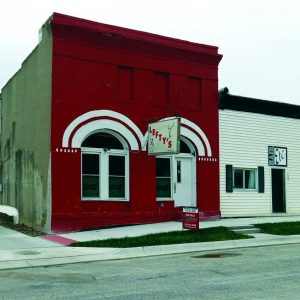
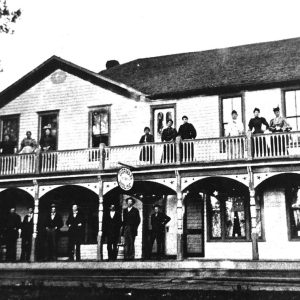
There were an estimated 100 people living in Tingley with around 40 houses and commercial buildings. This is very remarkable considering the trains were still six months away.
We are told Dr. St. John (formerly of Eugene) erected the first building in the new town. The building housed the office of Dr. St. John, his residence, and the drug store of Mr. V. D. Cowles, located at the intersection of Broadway and Depot streets.
The next business mentioned is a men’s clothing store and cafe owned by John Kelley. Then the biggest store in town owned by Messers Howland and McCreight. This business dealt in clothing, dry goods, groceries and various provisions. Across the street was J. Haver & Company, a dry goods and grocery store.
Next to the Haver store was the hardware store of Parrish & Taylor. Crossing the street was the Harris & George farm implement business.
George Swain had been appointed postmaster in early February 1882 and the Tingley Post Office also served as a grocery and dry goods store. Next was the millinery shop of Miss Ida Dutcher. A millinery is a women’s clothing store.
The town had two lumber yards at this time, one being operated by Beard & Son. The other, Embree Brothers, was larger with a greater variety of stock. Livery barns were essential and Ike Berry handled those duties.
Garvey, Dilley, Hughes and Burke were the local carpenters. Godfrey, Speck and Tate were local masons. There were no brick buildings at this time, so these guys probably built chimneys and building foundations.
From this account, a church, school, harness shop, barber shop and hotel have been omitted. They would come soon.
The railroad station was built in September 1882 and was ready for business about October 1. It still stands today, one of only two existing depots in Ringgold County.
Tingley voted for prohibition in July 1882. Being “dry” was once very popular. Not so much today. I found mention of a Josiah Lateer as the agent for the CB&Q town company. Railroads hired town companies to survey and lay out town plats. When I further searched this man’s name, he came up as being the town company agent that laid out the town of Diagonal in 1889. Interesting.
Rail service ceased at Tingley in 1945 and the Tingley Vindicator newspaper went out in 1948. The last seniors graduated from Tingley High School in 1959.
But, Tingley just opened their new community center and they have a very reputable restaurant. Another thing Tingley has is a long and respected history.