Still no Farm Bill passed
PROTECTED CONTENT
If you’re a current subscriber, log in below. If you would like to subscribe, please click the subscribe tab above.
Username and Password Help
Please enter your email and we will send you a password reset link.
By Jeff Snyder
MOUNT AYR, Iowa — Farmers across the nation, which include Ringgold County farmers will once again have to wait to see if Congress can pass a bipartisan Farm Bill this year. The current farm bill has been in effect since 2018 and has been extended multiple times, but has not been significantly revised.
The current bill is set to expire on September 30. The U.S. House of Representatives passed a bill with agreeable language for both primary political parties only to have the legislation stall in U.S. Senate.
The Farm Bill is slated to address a number of issues that are currently concerning farmers all across America. Costs are a significant concern as input expenses continue to increase, while wholesale prices are stalled. Import export challenges have limited access to normally reliable trading partners due to global political infighting along with stresses placed on war torn countries that supply fertilizer and machine parts to the United States. These geopolitical challenges have all conspired to hamper the farming industry.
Iowa U.S. Senator Chuck Grassley, a farmer himself, is not pleased that the bill has not passed the upper chamber yet.
“I’m very disappointed Democrats blocked the Farm Bill today in protest over common sense reforms that root out waste in the Supplemental Nutrition Assistance Program (SNAP) and protect the integrity of the SNAP program,” Grassley said in a statement. “Democrats’ obstruction leaves the fate of the Farm Bill in serious jeopardy at a time when farmers need our help.”
The SNAP program has been at the center of a variety of political disputes lately, most notably having certain food items and drinks regain eligibility after a removal earlier in the year. There were 13 states, including Iowa, that had placed limitations on certain food stuff eligibility, specifically candy and soda as non-eligible items under the SNAP program. Shortly thereafter, Congress declared that states did not have the right to redefine what “food” is stating that the federal government had already defined “Food” for the program and could not be redefined arbitrarily by the states. The SNAP program, which falls under the jurisdiction of the Farm Bill, has little to do with the core concerns of the farming community. The problem lies in that the SNAP program makes up the largest of the expenses contained inside the bill, as much as 80 percent of the budget.
The Democrats were able to block the normally bipartisan Farm Bill passage due to the absence of two Republican senators, Mitch McConnell of Kentucky, who has been absent recently due to health reasons, and Tommy Tuberville of Alabama, who left the chamber before the final role was called enabling the Democrats the numbers to block passage.
The farm bill has been extended repeatedly for years and is once again ensnaring Ringgold County farmers due to the lack of passage. Issues important to local farmers include crop insurance updates, fuel costs and seed costs for those producing beans and corn and subsidies currently contained in the original legislation. Local farmers and cattlemen share in the concerns of the rest of the nation.
“The Farm Bill gives us security,” Ringgold County Board of Supervisors Chairman Colby Holmes and farmer said.
Holmes has been in the agriculture business his whole life and expressed his frustration with the lack of passage of the most recent revision to this important legislation and the dramatic increase in costs.
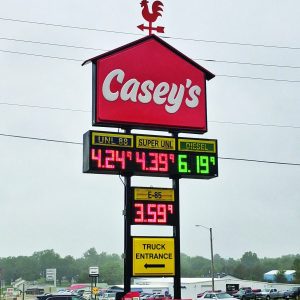
“When I first started farming diesel fuel was like 85 cents a gallon,” he said. “Now it’s five bucks. They have extended this bill three times already it’s time for them to pass this one.”
The senate is currently in recess until September, so no action on a revised farm bill will take place until legislators return to the nation’s capital.