Emergency sewer issue
PROTECTED CONTENT
If you’re a current subscriber, log in below. If you would like to subscribe, please click the subscribe tab above.
Username and Password Help
Please enter your email and we will send you a password reset link.
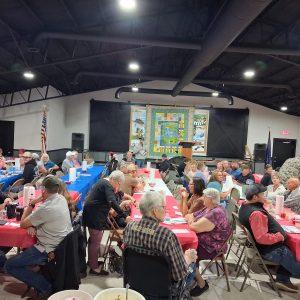
Mount Ayr city council members approved having Garden and Associates apply for an Iowa DNR construction permit for sewer repair/replacement at an emergency meeting on Tuesday, July 22.
Heavy rain event
Local residents called into The City of Mount Ayr after 6-7” of rain fell between June 24-25, which led city staff to investigate potentially broken and/or blocked sewer lines.
They initially tried to run a camera through a sewer line located to the west of Mount Ayr Manor, between Amy Lane and Hwy. 2, but ran into obstacles. Then a sewer jetter was brought in to try to clear the line.
After encountering several hurdles, Wise met with Bill Schaefer about potentially digging deeper into the problem and came up with a plan.
Wise and Assistant City Administrator, Brandy Anderson, reviewed all the sewer maps and prior video from 2002 that indicated a pretty decent sized hole in the line.
Mount Ayr City Administrator, Brent Wise, shared the emergency sewer project could cost roughly $75,000, with an additional $5,000 in engineering fees and $2,500 for staking and observation.
Inflow and infiltration
Rainwater or groundwater entering into the sanitary sewer system has been identified as a significant issue for the City of Mount Ayr.
Inflow, water that enters during or immediately after rainfall through direct connections like roof drains, sump pumps, or manhole covers, was noted to be one of the main issues.
Typically, rain is soaked up by the ground. It swells the earth up, and a slow four-day rain results in soggy, muddy ground until it drys out again.
However, when we get a heavy, hard rain, like the recent 6” rain event, the ground cannot absorb all that water at once.
Infiltration, or water seeping into the sewer system from the surrounding soil through cracks or defects in the pipes, was identified as the other issue.
While the Mount Ayr sewer plant is designed for a maximum of 1 MIL gallons of flow per day, the city estimated they processed 6.2 MIL gallons over the course of the two-day rain event.
Any influx of precipitation leads to a continual draining of water, which sits in sewer lines until the sewer plant can process it.
“We realized when we get a heavy, hard rain, and especially if it’s been dry, like our situation, when it comes hard, it’s going through cracks,” stated Brent Wise, City Administrator. “The ground would have soaked up a lot of that, not all that by any means, but then sump pumps kick in.”
Sump pump violations
Mount Ayr, like many other municipalities, prohibits discharging sump pump water into the sanitary sewer system to avoid overwhelming the public treatment facility.
While a sump pump may only pump a gallon or two at a time, Wise estimates that the short 10-second run cycles could add up to 50-100 gallons in a minute.
Sump pumps should ideally discharge into the yard, away from any dwellings or buildings, so the ground can soak up the excess water.
“You want to get it far enough away from your home, so it don’t go right back down into your foundation,” says Wise.
However, some residences have sump pumps that are tied directly into a City of Mount Ayr sewer line, which is a violation of the Sanitary Sewer System ordinances.
According to the Mount Ayr Code of Ordinances, Chapter 95, “No person shall…Connect a roof downspout, sump pump, exterior foundation drain, areaway drain, or other source of surface run-off or groundwater to a building sewer or building drain which in turn is connected directly or indirectly to a public sanitary sewer.”
Additionally, Chapter 97 states “No person shall discharge or cause to be discharged any storm water, surface water, groundwater, roof run-off, sub-surface drainage, uncontaminated cooling water, or unpolluted industrial process waters to any sanitary sewer.”
Clean Water Act
Just over 50 years ago, there was minimal federal oversight—no guidelines, objectives, or limits to pollutants, and each state was left to figure out how to handle unclean water themselves.
Prior to the Clean Water Act (CWA) enacted in 1972, our lakes, ponds, and oceans were open dumping grounds for waste and sewage.
Under the CWA, the federal government was given authority to set limits for water pollution, help fund wastewater infrastructure, and support water quality research and technology.
While the CWA was amended in 1977, 1981, 1987, and 2014, the original intent “to restore and maintain the chemical, physical, and biological integrity of the Nation’s waters,” continues to restore once-dying public waterways.