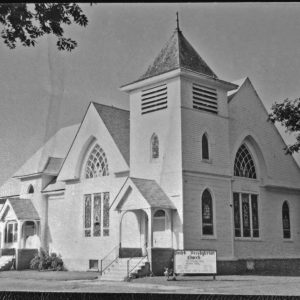
Snapshots of History by Mike Avitt
I am recalling my memories of Mount Ayr from 1970 to 1973 and I am enjoying reliving my hometown in the “good ol’ days.”
Corporal punishment was alive and well in Mount Ayr’s junior high school, 1970-71. My eighth grade homeroom teacher was Ezra Rice and he had a wooden solution to my discipline problems. Rice had a bad boy paddle he used to corral the herd of rowdy students in his class. Mike Robertson was probably the most frequent recipient of Rice’s paddle. I got spanked three times and I remember the last time quite clearly.
It was the last day of school and Tony Butler was running amok. Against my better judgement, I allowed myself to get caught up in his anarchy and we both were brought to the front of the room for our public flogging. By this time, Rice was without his famous swatter. Doug Frost and Jeff Monaghan had kidnapped the paddle days before. Now, Ezra was using meter sticks taped together. I heard them crack as they met my posterior and the meter sticks completely exploded when they came crashing down on Tony’s hind quarters. It was hilarious.
I said meter sticks. No one remembers this but the U. S. was attempting to convert from the standard system to the metric system in 1970. That effort failed. Also, Larry Kimble wielded a wooden paddle but I didn’t get spanked in his class. I don’t know why. Corporal punishment was entirely eliminated by 1972. And in Ezra’s defense, that homeroom class was full of disobedient rebels.
In 1972, Mount had two drug stores. Pharmacies are often just drug dispensaries, but drug stores have soda fountains. And, above all, soda fountains have variety. One could get a cherry coke at a drug store counter decades before Coca-Cola put the drink in cans and bottles. My favorite drink was a Green River which was nothing more than lime-flavored syrup in carbonated water. But, the color and the name were superior! A vanilla phosphate was nothing more than a cream soda, but one name is much more appealing. And ice cream could be added to anything. There were a couple of booths in Horne Pharmacy for soda guzzling teens. I did not patronize McNeiley Drug and, again, I don’t know why.
Drug stores usually had a magazine rack which included comic books. I would read a couple of Archie and Jughead comics, then place the comic book back in the rack. Comic books were 15 cents in 1971.
Horne Pharmacy threw away magazines and I would find magazines like “True Detective” in their trash. The cover was removed so Horne could return the cover to the distributor to prove the magazine didn’t sell and would not be charged for it. I don’t think I did much “dumpster diving.”
There were trash piles around town left over from the old days. These piles consisted of items that wouldn’t burn like glass, ceramic and metal. One such pile was on North Taylor Street behind Norman Reynolds’ house. The area is grown up in brush and trees now. My cousin Robin McFall and I dug through the dirt at the base of that pile and found old medicine bottles. These bottles were square or rectangular with raised-glass lettering. Having never seen anything like that, we thought these were so cool we had to take them home. Our mothers were not near as fond of bottles full of dirt and ants as we were. Nevertheless, we started a bottle collection that we worked on for a couple of years.
My criminal comrades and I committed a few crimes and I’ll share some of the lesser ones. We stole soda pop bottles. I don’t remember the year that bottle redemption increased from three cents to five cents, but pop bottles were always a target. To combat bottle theft, Hy-Vee parked a portable building on the west end of their parking lot to store empty pop bottles. My cousin and I were skinny enough to crawl under the building, which was on blocks, and crawl through a hole in the floor. Once inside we struck a match for light. There were certain bottles soda pop carriers would not redeem like Tyler Bros. (a defunct brand), obscure brands of root beer and oddities like chocolate milk bottles. These bottles got added to our bottle collection.
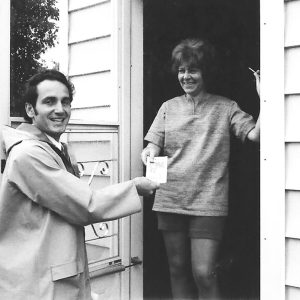
I delivered the Des Moines Tribune and Sunday Register in 1970-71. My first stop was the telephone office on South Taylor Street. There was a back door I knocked on and then one of the telephone operators would open the door and take the paper. One had to use an operator to make a long-distance call in those days. I remember when one calling from Mount Ayr could call another Mount Ayr number by dialing the last four digits only. No answering machines then. To call someone, you had to be home and they had to be home. How often did that happen? not often.
I don’t remember using the phone much. It was common to have phone numbers written on the wall or on a piece of paper by the phone. Phonebooks gave the phone owners address as well as their phone number.
Mount Ayr was in “no man’s land” when it came to television reception. True story — many of Mount Ayr’s TV antennas had electric motors on them to change the direction they faced. Pointing north-northeast, an antenna might pick up Des Moines or Ames. Maybe. Pointing southwest, one could usually pull in Channel 2 out of St. Joseph, Mo., an ABC affiliate. Channel 2 was important on Saturday night because of Big Two Wrestling, a wildly popular professional wrestling program. There were four channels: 13 (NBC), 8 (CBS), 5 or 2 (ABC) and channel 11 (Public Television). Most television sets had black and white screens. Evening programming included variety shows that combined comedy with music like “The Dean Martin Show.”
More next time.